On this page

The One Category in Software
Bill Gates believed there was only one category in software. He called it information management. Schematize people, places, and things. Everything else follows.
He hated file systems because they were unstructured. He wanted SQL queries against all information. That was the elegant solution. Satya Nadella describes this vision in a recent conversation, then delivers the punchline.
The problem is, people are messy. Even if data is structured, it sort of is not truly available in one index. One SQL query that I can run against all of that. So that has been the fundamental challenge of the old world.
That is Wire's operating premise. People are messy. Content teams are messy. Frontmatter is messy. Navigation structures are messy. Wire exists because somebody has to impose the schema that people will not impose on themselves.
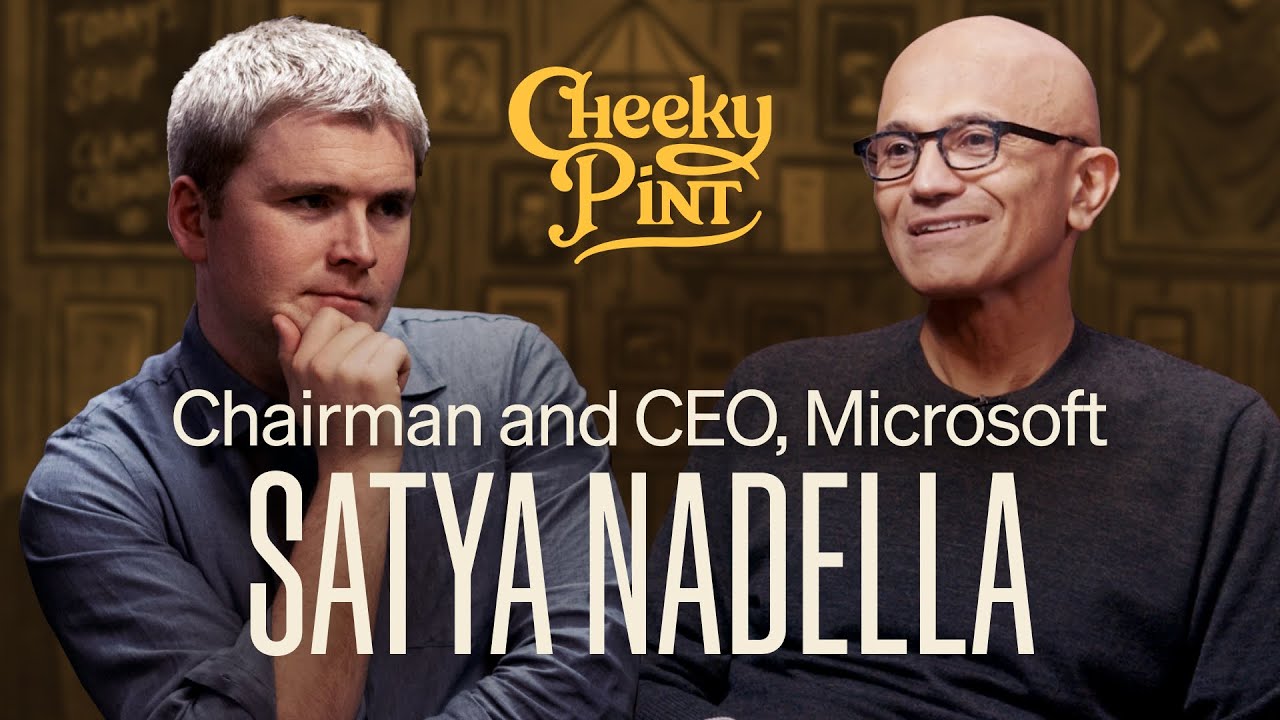 Click to load video from YouTube
Organizing Layers Always Emerge
Nadella makes a point about the history of the web that most people in tech already know but rarely say out loud.
There's no such thing as the open web. There's the Google web. They just dominated it.
He then extends this to the current moment: organizing layers always emerge, even in open ecosystems. Search engines organized the web. App stores organized mobile. Chatbots are organizing AI.
Wire is an organizing layer for content. Not for the web at large. For the specific problem of getting a B2B site from messy markdown to a clean, validated, lint-free deployment. 90 rules. 30 gates. No silent failures. The build system is the organizing layer that stands between a content team's intentions and what actually ships.
The Database Is No Longer a Database
Nadella describes the enterprise data layer as the hardest unsolved problem. Companies do not eat their data infrastructure vegetables. The pitch to executives is always the same: all your data at your fingertips. It never happens.
Organizing the data layer turns out to be probably the most complicated thing, which spans the enterprise such that it can meet the intelligence.
Gates wanted SQL against everything. A relational schema for people, places, and things. That was elegant in theory. In practice, the data never fit the schema. Emails, calls, documents, relationships between people and projects: all structured in someone's head, unstructured everywhere else.
Nadella's point is that neural networks solved the pattern problem that schemas could not. Not by imposing structure, but by learning from the mess. The database is no longer rows and columns. It is parameters and weights. The organizing layer moved from the schema to the model.
I would have not thought that somehow this AI thing and a deep neural network at some scaling will suddenly become the thing that figures out the patterns. Not some schematized data model.
This applies everywhere messy data needs to become linked, toned, and navigable. A company's internal knowledge base. A 500-page content site with broken internal links. The open web itself, which Google organized not through a schema but through PageRank, a pattern model that learned which pages mattered by observing how they linked to each other.
Wire operates at the content layer of this problem today. A site is messy data: pages with inconsistent frontmatter, orphaned articles, duplicate topics, broken links, thin content. The build system imposes structure through validation. The workflow sequences the cleanup.
But the principle has nothing to do with homepages. It is the same whether the mess is a content site, a product catalog, a company's internal knowledge base, or a compliance archive. Messy data does not organize itself. Something has to impose the links, enforce the tone, and refuse to ship until the structure holds.
Wire builds websites today. The harder problem is everything that is not a website. Companies have thousands of documents, policies, and product descriptions that contradict each other, link to nothing, and rot in shared drives. A chatbot on top of inconsistent data gives inconsistent answers with confidence. What those companies need is not another conversational interface. It is a validation layer that refuses to publish until the knowledge base is structurally sound. That is the one category Gates described in the 90s.
Macro-Delegation, Micro-Steering
The interview's most forward-looking section describes how people will work with AI agents. Nadella's framing: massive macro-delegation with micro-steering. You send agents off to work for hours. They check in. You course-correct through a structured interface.
It's macro-delegation, micro-steering. I have thousands of agents going off. How am I going to make sense of the micro-steering of thousands of agents? That is what IDEs slash inboxes and messaging tools will be.
This is already how Wire works. Christopher gives a topic and constraints. Wire runs news, refine, reword, build. The audit report is the structured check-in: HEALTH, ACTION, SEO, INFO. Christopher steers. Wire executes. The interface is the terminal.
Nadella describes the future IDE as "mission control for agents, where PR triage is where the next IDE is born." Wire's audit output is a version of this. Not for code. For content. Which pages need merging. Which keywords are cannibalizing. Which articles need news. Structured triage for a human to steer.
Excel, the Accidental IDE
The most underrated moment in the interview is about Excel.
We sort of don't give it enough credit. It's like, I can make it do everything. I think it's the world's most approachable programming environment.
Wire's wire.yml aspires to this. Declarative configuration that controls complex behavior. You do not need to understand Python to run Wire. You write YAML keys and Wire enforces 90 lint rules, validates frontmatter schemas, generates sitemaps, builds JSON-LD, and refuses to deploy when something is wrong. The gap between Wire and Excel's approachability is still large. But the design intent is the same: make the operator productive without making them a developer.
Why Wire Can Afford to Be AI-Authored
Wire's intelligence never touches HTML. That is not a design choice. It is an economic one.
The AI writes :::testimonial and a quote. Three lines. The build expands that into 40 lines of styled HTML with classes, aria labels, and responsive breakpoints. The AI never sees the output markup. A page with six components costs the same in tokens as a page with none.
Every token spent generating <div class="testimonial-wrapper"> is a token not spent on structure, tone, or linking. Wire's component system keeps the AI constrained to the work that matters. The diff stays readable. The cost stays low. The quality stays high.
Sovereignty Is Owning Your Own Intelligence
Nadella redefines sovereignty. Not where your data center sits. Whether your company owns the intelligence layer that makes it a company.
The new intellectual property at Eli Lilly or at Microsoft or at Stripe at some point can be, besides all the humans, besides all the other artifacts we have, they are in some embedding.
This is the logical conclusion of "databases are no longer databases." If your company's knowledge lives in a model's weights rather than in a SQL table, then owning that model is owning your company's brain. Lose the model, lose the tacit knowledge that makes you different from every competitor with the same foundation model and the same API key.
Wire's version is smaller but the same shape. A customer's _styleguide.md is their editorial voice. Their prompt overrides are their content strategy. Their wire.yml is their site architecture. All version-controlled, all portable, all theirs. Wire does not hoard intelligence. It gives customers a scaffold where their messy knowledge gets linked, validated, and compounded in their own repository.
That is content sovereignty. Not "we host your site." We give you the schema. You keep the knowledge.
This Is Not Dark Fiber
Nadella makes the sharpest rebuttal to the AI bubble narrative by pointing out what is different from the dot-com era.
When I look at my earnings, I can have, I mean, this is the last time I was so supply constrained. I don't have a utilization problem. My problem is I got to bring more supply.
The dot-com bubble was a fiber bubble. Dark fiber. Unlit infrastructure built on speculation. The current AI infrastructure buildout is sold out. Every GPU is in use. Every rack has a customer.
Wire is similar in miniature. Every lint rule exists because a real site shipped a real defect. No speculative rules. No "this might matter someday." The content quality system has three layers because three layers were needed to catch what one layer missed. The complexity is load-bearing.
What Sticks
People are messy. That is not a complaint. It is the design constraint.
Gates wanted SQL against everything. Nadella says neural networks turned out to be the solution to the pattern problem that schemas could not solve. Wire sits somewhere in the middle: structured enough to enforce quality, flexible enough that messy humans can still write content without learning to code.
The interview is worth the full 80 minutes. Not for the AI predictions. For the organizational clarity. How a 200,000-person company thinks about modularity, sovereignty, and the difference between a founder who knows every line of code and a leader who knows the person who wrote it.
Wire knows every line of code. Christopher knows why it was written. That is the division of labor Nadella describes, applied to a two-person operation instead of a $3 trillion company.
Source: Satya Nadella on the Stripe Sessions podcast, March 2026.